India

How Can Real-Time Flow Monitoring Support Hydraulic Modelling and Pressure Management in Bodrum, the holiday heaven in Turkey?
Spending a holiday in a five-star resort beside the turquoise sea may feel effortless, but behind that experience lies a major operational challenge for local water authorities. Muğla is one of Turkey’s most important tourism regions, and Bodrum is a clear example of how seasonal population changes directly affect water networks. While the province’s year-round resident population is around 1 million, this number can rise to between 3 and 5 million during the summer months as tourists and seasonal workers arrive in coastal destinations such as Bodrum, Marmaris, and Fethiye.
This sharp seasonal variation makes water management far more complex: the network must deliver enough water during peak holiday demand, while in winter it must avoid excessive pressure, leakage, and unnecessary stress on infrastructure when consumption drops again. For this reason, accurate flow monitoring, hydraulic modelling, DMA zoning, and effective pressure control are essential for reducing water losses, protecting network assets, and managing available water resources more efficiently.
Starting at 2025, NIVUS NivuFlow 600 clamp-on flowmeters were used in the Bodrum / Konacık drinking water network as part of a project designed to support exactly these objectives. The project included a total of 36 NIVUS NivuFlow 600 units supplied by NIVUS GmbH, Germany.
Definition of Task
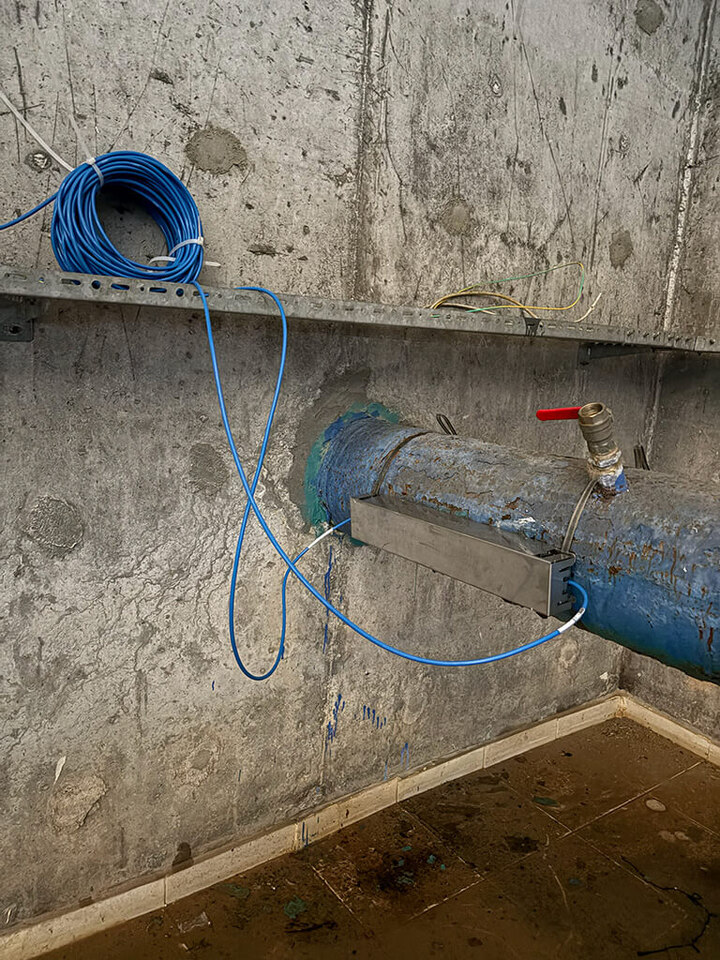
The objective of the project was to establish a reliable flow measurement infrastructure within the drinking water distribution network as a basis for hydraulic modelling, DMA zoning, and pressure management. Continuous and accurate flow data from critical supply lines was required in order to understand network behavior under varying demand conditions and to support more efficient system operation. At the same time, site conditions at many locations limit the use of conventional inline flowmeters, as chamber geometry, pipe arrangement, and ground conditions would have made civil works and mechanical installation disproportionately complex. The water authority therefore aimed to minimize major construction activities, operation costs and installation effort, carbon emission and reduce material use as well as avoid operational disruption associated with intrusive works.
In parallel, pressure management had become a key operational priority, since excessive or unstable pressure contributes directly to leakage, asset deterioration, pipe bursts, and increased Non-Revenue Water (NRW). Effective pressure management, however, depends on accurate and continuous flow measurement, as only reliable flow data allows operators to understand demand patterns, define and validate DMAs, calibrate hydraulic models, and identify areas where pressure can be optimized without compromising service levels.
Under these conditions, the project required a measurement solution capable of delivering dependable field data without invasive intervention, thereby creating the technical foundation for data-driven pressure control, improved network efficiency, and long-term NRW reduction.
Solution
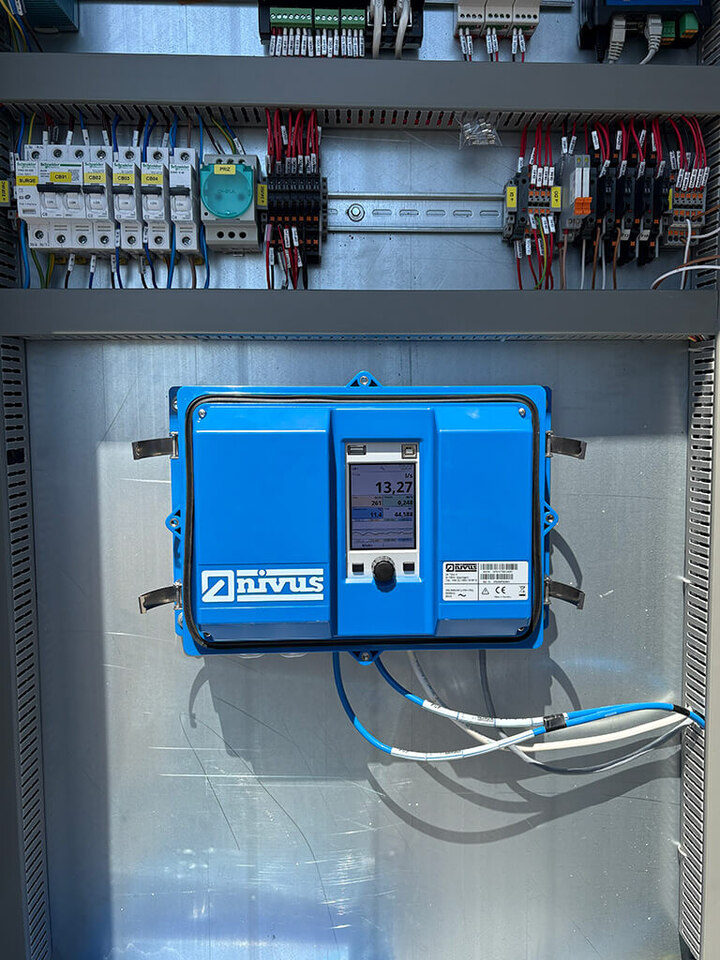
To meet these requirements, a total of 36 NIVUS NivuFlow 600 clamp-on flowmeters were installed on the main transmission lines feeding the reservoirs and at selected monitoring points within the network. In comparison with conventional inline electromagnetic flowmeters, the clamp-on concept provided clear technical and operational advantages, as measurement could be implemented externally without pipe cutting, service interruption, water shutdown, or intrusive mechanical modification of the pipeline.
This approach substantially reduced the extent of civil work, eliminated the need for large installation machinery in most locations, and minimized material consumption, installation effort, and the energy use and carbon emissions associated with invasive construction activities. The NivuFlow 600 units deliver real-time and totalized flow data, which are transmitted via Modbus to the RTU and onward via GSM to the central SCADA system.
In this configuration, the operator obtained continuous and dependable visibility of network flow conditions, providing the field data required for hydraulic model calibration, DMA definition, pressure management, and the systematic reduction of water losses and Non-Revenue Water.


![[Translate to English:] Durchflussmesser NivuFlow 600](/fileadmin/_processed_/a/3/csm_NivuFlow_600_schraeg_b98c911ea0.jpg "[Translate to English:] Durchflussmesser NivuFlow 600")
![[Translate to English:] Berührungslose Durchflussmesser - Clamp-On Sensor](/fileadmin/_processed_/e/e/csm_Clamp-On-Flow-Sensor_cc4f3f9d0f.jpg "[Translate to English:] Berührungslose Durchflussmesser - Clamp-On Sensor")